What life is like for students in Dublin, Cork and Galway.
Ireland is one of those countries people choose for the English and end up remembering for everything else. It's a small country, easy to get around, safe and with a very welcoming culture. And since it's part of the European Union, hopping around the continent for weekend trips is simple.
If you're thinking about studying there, you've probably already looked at schools or visa types. But the big question is usually a different one: what is living in Ireland really like?
What everyday life looks like, what it costs, which city fits you best, what to expect from the weather, how to find accommodation and how long it takes to feel at home.
In this guide we tell you what life is like once you land. Without idealising it, and without settling for the clichés either.
The three cities
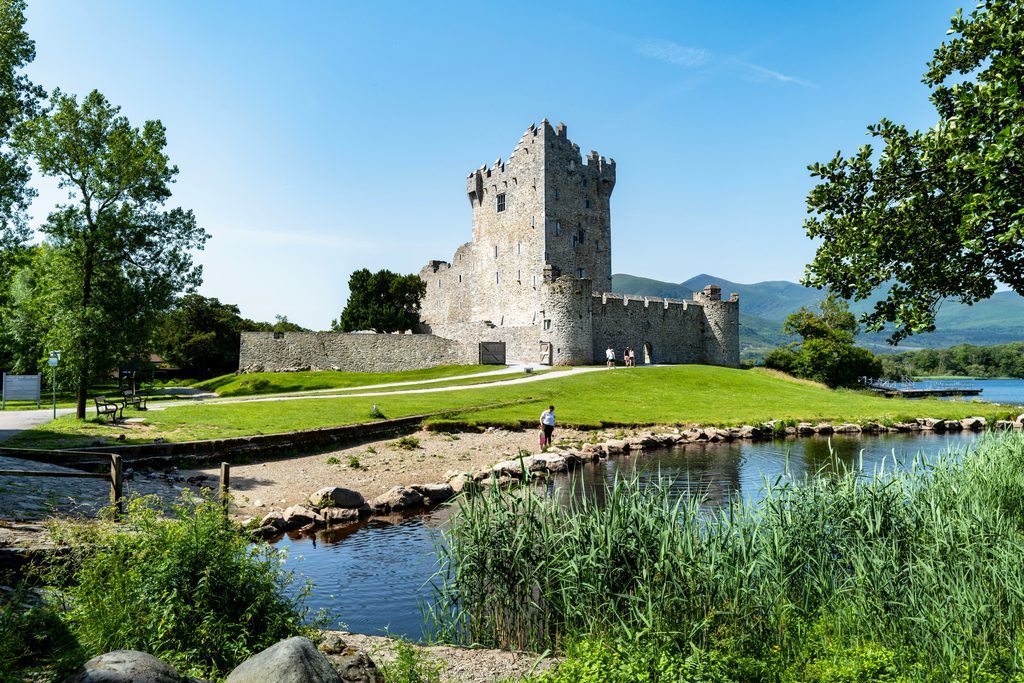
The city you choose will shape a big part of your experience. Distances in Ireland are short, but the atmosphere you'll find in Dublin, Cork or Galway is very different.
Dublin
Dublin is the gateway for most international students. It's the capital, the biggest city, and the one with the most opportunities to study, work and meet people from every corner of the world.
Here you'll find universities like Trinity College, the offices of the major tech companies, lively neighbourhoods, gigs practically every week and more going on than you'll ever get through.
The River Liffey runs through the middle of the city, while places like Temple Bar, with its pubs and live music, or Phoenix Park, one of the largest urban parks in Europe, are part of everyday life for anyone living there.
It's also the most expensive city in the country. Rent is the biggest cost for almost every student, and finding a room takes patience, especially in September and January, when thousands of people arrive at once.
In return, it's where finding work is easiest and where there's always something on.
Cork
Cork offers a completely different experience.
It's Ireland's second city, but it keeps a much calmer, friendlier pace. It's big enough that you won't outgrow it, without the stress or the traffic of a capital.
The city revolves around the English Market, one of the oldest markets in the country, and University College Cork, whose campus gives the city a strong university feel all year round.
A few kilometres out, you're into small fishing villages, beaches and some of the prettiest scenery on Ireland's south coast.
On top of that, the cost of living is usually more affordable than Dublin, especially for accommodation. If you're after a good balance of quality of life, budget and opportunities, Cork quickly becomes a favourite for people arriving in Ireland.
Galway
Galway is the smallest of the three cities, but probably the one with the most personality.
It sits on the Atlantic and many consider it the cultural heart of Ireland. It's a city where there always seems to be music in the street, performers in the squares and festivals filling the calendar.
It's home to the University of Galway, the lively Latin Quarter,, Shop Street and the seafront promenade at Salthill, one of those places where it's easy to end up watching the sunset without noticing the time.
In summer the city comes even more alive thanks to the Galway International Arts Festival, while September brings the famous Galway Oyster Festival, two events that draw visitors from all over the country.
It's also the easiest city to get around on foot and, as a rule, the cheapest for an international student.
Each city offers something different.
- Dublin stands out for its opportunities, its international feel and the city's constant buzz.
- Cork offers a more relaxed life, with a very attractive balance between cost of living and quality of life.
- Galway is perfect if you want a closer-knit, creative experience connected to nature.
The good news is that Ireland is a small country. Over the year you'll end up visiting all three cities more than once, so whichever you choose, the others will always feel just a few hours away.
A typical week
Once you're past the first weeks of settling in, life in Ireland quickly finds its rhythm. Classes, work, plans with friends and weekend trips all fall into place almost without you noticing.
Most people have class on weekdays, usually in the morning or early afternoon. Between classes it's normal to stop for a coffee, study in the library or meet classmates to work on assignments. Most students cook at home during the week and save eating out and the pubs for the weekend.
Pub nights are part of Irish social life, but not in the way many people imagine. You go to hear live music, chat with friends or simply have a good time. Some order a pint, others a coffee or an alcohol-free beer. The point isn't the drinking; it's the time you share with people.
Weekends are for exploring the country. If you study in Dublin, it's easy to escape to Howth, Bray or the nearby cliffs. From Cork you can visit some of the prettiest villages on the south coast. And if you live in Galway, the Wild Atlantic Way, Connemara and the Cliffs of Moher are practically on your doorstep.
Sundays have a completely different pace. In many smaller cities the shops close early and everything seems to slow down a little. It's a very Irish habit that surprises you at first, but plenty of students end up being grateful for it.
If you decide to work while you study, the rhythm changes a little, but it stays perfectly manageable. On a Stamp 2 permit you can work up to 20 hours a week during term time and extend those hours during the established holiday periods. Most people find work in hospitality, retail, customer service or cafés, and settle into the routine within the first month.
What it costs to live there
After accommodation, the rest of the budget is usually fairly easy to control. The cost of living changes with the city, but once your routine is set, your expenses are quite predictable.
Dublin: from €900 a month
Dublin is Ireland's most expensive city, and rent explains almost all of the difference. A room in a shared flat usually starts at €600 a month, though in the most central areas it can climb quite a bit.
In return, it's where you'll find the most job opportunities, the most going on and a huge international community.
Cork: from €700 a month
Living in Cork tends to be noticeably more affordable. A room in a shared flat can be found from around €500 a month, while other costs stay very close to Dublin's.
That's exactly what many students point out: the feeling of a very high quality of life without needing such a big budget.
Galway: from €600 a month
Galway is usually the cheapest option for international students. Rent starts at roughly €450 a month and, on top of that, you can walk almost everywhere, so transport costs practically disappear.
It's a small, easy city where organising a tight budget is very doable.
As for groceries, the differences between cities are minimal. Lidl and Aldi are the cheapest options, while Tesco, Dunnes Stores and SuperValu offer a wider range of products.
The usual pattern is cooking at home most days and eating out now and then at the weekend. A meal at a casual restaurant usually costs between €15 and €20, while a pint at a pub is around €6 or €7 in Dublin and a bit less in Cork and Galway.
In practice, most students keep a good balance between spending and quality of life by combining a shared flat, home cooking and a part-time job.
Finding accommodation
If there's one thing that worries people before travelling to Ireland, it's accommodation.
The good news is that practically every student goes through the same process. The less good news is that, especially in Dublin, finding a room takes patience.
The most common option is sharing a flat with other students or young professionals. It's the cheapest and most flexible choice, and one of the quickest ways to start meeting people when you've just arrived.
Whole apartments exist, but they cost far more and the competition is much tougher. Studios are scarce and usually go to people who've been living in the country longer.
Most international students find their long-term room between two and four weeks after landing. That's why we usually recommend booking a hostel, an Airbnb or other temporary accommodation for the first days and looking for your flat once you're there. Being able to view the place in person makes a huge difference.
The platform practically everyone uses is Daft.ie, where most available rooms and flats are listed. Facebook groups and student word of mouth work very well too.
We help you understand how the market works, which neighbourhoods tend to suit you depending on your school, what to ask during a viewing and how to avoid the most common scams.
When it's time to sign the lease, pay the deposit or understand your rights as a tenant, we're there too, so the whole process gets much simpler.
In most cases, finding accommodation comes down to persistence more than luck. People who view several rooms, reply to ads quickly and arrive with temporary accommodation for the first weeks usually find their place sooner than they expected.
The weather
If you've never been to Ireland, the first thing you've probably heard is that it rains a lot.
And yes, it's true. It rains often. But it's also true that most people imagine a much harsher climate than the one they actually find when they arrive.
The first surprise is that temperatures are mild all year round. Winters are rarely bitterly cold and summers don't bring the intense heat we know from Spain or Latin America. Typical temperatures sit between 4 and 7°C in January and 14 to 16°C in July.
More than a cold country, Ireland is a changeable one. You can leave home in sunshine, get caught in a downpour twenty minutes later and see clear sky again before the walk is over. After a few weeks you stop checking the forecast and simply head out with a waterproof jacket.
There's something else many students discover when they arrive: the Irish summer.
In June the sun can set close to ten at night. The days feel endless, and that completely changes how you live the city. After class there's still time to go for a walk, meet friends or head to the coast while it's light.
Winter invites you to do exactly the opposite. The pubs fill up earlier, the cafés become places to spend the afternoon and life gets a little quieter. It's a very authentic part of Irish culture and it ends up having its own charm.
If we could give you just one packing tip, it would be this: forget the umbrella and bring a good rain jacket. You'll use it far more.
Irish culture
There are things you only discover by living in Ireland that never show up when you research the country. Small details that end up defining the experience and making life there different.
The first is understanding what a pub really means to the Irish.
From the outside it looks like just a place to have a beer. In reality, it works almost like the city's living room. People meet there for breakfast, coffee, lunch, live music or a chat after work. You can order a pint, a soft drink or a tea and nobody will bat an eyelid.
The Irish have a word that sums up that way of living very well: craic. It has no exact translation. It's about enjoying the conversation, the company and having a good time without needing big plans. You'll start hearing it sooner than you expect.
Another of the best ways to fit in is sport.
The Gaelic football, hurling and camogie are part of the country's identity. Almost every university has beginner teams, and joining one is one of the fastest ways to meet Irish people instead of always moving inside the international-student circle.
And then there's the calendar.
In Ireland there always seems to be a festival, a gig or a celebration going on. St Patrick's Day transforms the whole country every March, Halloween is celebrated in a distinctive way because it originated in Ireland and, over the summer, practically every city puts on music, film, theatre or food festivals.
You'll notice one more difference compared with other countries.
Sundays move slowly. Many shops close early, especially outside the big cities, and the pace naturally drops. It's surprising at first, but it becomes one of those small habits many students miss when they go back home.
Making friends and meeting people
One of the questions we get asked most before people travel is whether it's easy to meet people.
The short answer is yes.
Ireland welcomes international students from all over the world, which means almost everyone arrives in the same situation as you: knowing nobody and ready to start from scratch.
You usually make your first friends in class without even noticing. Then come flatmates, workmates and the plans the schools themselves organise.
The Spanish-speaking community is especially big in Dublin. There are WhatsApp groups, student activities and events where it's very easy to meet people who've been living there longer. At Australian Way we also connect you with students who are already settled when you arrive in the country.
Over time, most people end up moving between three different circles.
The international friends you meet at school.
The community of Spaniards and Latin Americans living in your city.
And the Irish friends you make through work, sport, university or your shared flat.
The first two happen almost naturally. The third takes a little more initiative, but it's usually the one that makes Ireland end up feeling like home.
What to know before you go
Ireland has a huge amount going for it, but there are a few realities worth knowing before you pack. They're not reasons to stay home; they just help you arrive with realistic expectations.
The first is accommodation.
Especially in Dublin, finding a room can take some time. Demand is high all year round, so it's wise to arrive with temporary accommodation for the first weeks while you search calmly. Cork and Galway are usually a bit easier, though it still pays to start looking as early as you can.
You'll also notice fewer hours of sunshine than you're probably used to.
The sky is overcast a good part of the year and rain shows up often, though temperatures are much milder than many people imagine. Most students adapt quickly and find the weather shapes their life far less than they expected.
Another important difference is the language.
Although you'll see signs in English and in Irish (Gaeilge), your whole daily life will run in English. It's the language you'll use to study, work, rent a room and make new friends. You don't need to arrive with perfect English, but the sooner you push yourself to speak, the sooner you'll notice the change.
And finally, remember that Ireland is a small country.
That means distances are never a problem. You can cross the country in a few hours and organise weekend trips with ease. For some students that turns out to be one of the best surprises of the year.
How Australian Way helps you
We've spent years helping students start a new life in Ireland, and we know that before travelling, almost everyone has the same questions.
That's why we start with a free 15-minute call. We talk about your situation, your goals and the city that fits you best. By the end of the call, you have a much clearer picture of what your year in Ireland could look like.
Before you travel we help you choose a school, prepare your documents and organise everything that matters for landing. We also answer the questions that always come up in those final weeks: how much money to bring, what clothes are worth packing and where to stay for the first few days.
When you arrive in Ireland, we don't disappear.
Our team stays with you through the first weeks to help with all that admin that always looks harder from home: starting the accommodation search, finding your way around the city and connecting with students who've been living there a while.
Over the years we've also picked up plenty of small things no guide mentions. Which neighbourhoods each kind of student tends to like. What time of year it's easiest to find a room. Which areas are worth visiting on your first weekend. Or the pubs where there's always live traditional music.
The kind of advice you only pick up after supporting thousands of students.
Because our work doesn't end when you land.
We stay with you for your whole time in Ireland.
What we always get asked on the first call
Which city should I choose?
It depends on what you're after. Dublin offers more job opportunities and a much more international life. Cork is perfect if you want a calmer pace without giving up a full city. Galway stands out for its university atmosphere, its size and its cultural life. On the call we help you work out which one fits you best.
Can I work while I study?
Yes. On a Stamp 2 you can work up to 20 hours a week during term time and 40 hours during authorised holiday periods. Most students find work in hospitality, retail or customer service.
Is Ireland a safe country?
Yes. Ireland is considered one of the safest countries in Europe to live and study in. As in any city, the usual precautions apply, but daily life tends to be very calm.
Do I need to speak Irish?
No. Everything runs in English. Irish is part of the country's culture and appears on some signs and official documents, but you won't need it to study or work.
Is it easy to meet people?
Very. The schools organise activities constantly and the international community is huge. And in cities like Dublin you'll find a very active Spanish and Latin American community from day one.
Is the weather really that bad?
Not as bad as you imagine. It rains often, but temperatures are mild all year. With a good rain jacket and a few layers you're ready for almost any day.
How much money do I need to live?
It depends on the city and your lifestyle. As a reference, most students spend between €600 and €900 a month, with Dublin the most expensive city and Galway the cheapest.
Is the food good in Ireland?
Much better than people tend to think. Irish food has come a long way in recent years, and cities like Cork have an excellent food scene. Supermarkets offer very good quality too, so cooking at home is easy.
When will I start to feel at home?
Most students agree the shift comes around the third month. The first is usually spent sorting out the practical side. By the second you have a routine. And almost without noticing, one day you realise the city has stopped feeling new and started feeling like home.
Ready to start?
A 15-minute call can save you weeks of doubts.
We'll talk about the city that fits you best, the budget you need, the school, accommodation and what your time in Ireland could look like.
By the time you hang up, you'll have a much clearer plan to start this adventure.
Book a free call.